UNLV Magazine UNLV

UNLV Magazine Home
Back Issues
Request a Back Issue
Subscribe to Magazine
Submit Class Notes Entry
Letters Policy
Contact the Editor

Enter Your Page Heading Here

Connected at the Roots

Sen. Harry Reid’s early academic challenges lay the groundwork for his dedication to higher education – and to UNLV

Longtime UNLV English professor Joe McCullough was sitting on a bench on Pida Plaza smoking his trademark cigar one morning last year when he noticed what looked like a U.S. Secret Service contingent hovering in the area.

"You can't miss those guys – the earpiece, the suits, the way they stand. So I was trying to figure out what dignitary was visiting the campus," says McCullough, who soon after approached one of agents, who was in fact a U.S. Capitol policeman. "I said, 'Harry Reid is here, isn't he?'" About the time the officer began looking nervous, Reid emerged from Frank and Estella Beam Hall and greeted McCullough like a buddy from the old neighborhood.

"Harry did what he always does when he sees me," McCullough says. "He shook my hand and launched into a story from the old days with attention to details that I couldn't even recall. That's just the way Harry is. He has an incredible memory for detail and a genuine fondness for his old friends."

McCullough, like many at UNLV, has a long-standing association with Reid, the second most powerful Democrat in the U.S. Senate and a leader respected on both sides of the aisle. McCullough served, along with then-political science professor Andy Tuttle, as an adviser to Reid in his Congressional bid in 1982. The two faculty members joined with other locals committed to helping launch Reid"s Washington political career, which has now lasted more than two decades. After serving two terms in the U.S. House of Representatives, Reid was first elected to the Senate in 1986. He is currently in his third term as a senator and was chosen by his colleagues as minority "whip," or assistant Democratic leader, in 1998.

As politically powerful as he has become, Reid has never forgotten his Nevada roots, McCullough notes, adding that he doesn't mind if his assessment of the politician sounds clich". "Harry has never forgotten his humble beginnings growing up in Searchlight, and it has always been very important to him to stay in touch with Nevadans."

Reid has also not forgotten UNLV. His connection dates back to when the institution was called Nevada Southern University. He remembers watching an acquaintance from his Basic High School days play basketball at the young university.

"There was a fellow by the name of Bernard Fumagalli on the basketball team," Reid says. "He was a college All- American, so we used to try to get out and watch him play. You know they played at Dula Community Center at the time" They had no gym on campus, of course. That was my first recollection of UNLV – or Nevada Southern."

There was another reason for Reid to attend the games: His high school sweetheart, Landra Gould, was a student and a cheerleader at Nevada Southern. Although Reid was attending college on a scholarship in Utah, he found time to watch Landra cheer for her team. (The two married in 1959 and have five children and 15 grandchildren.)

While he enjoyed watching and participating in sports, Reid acknowledges that he struggled academically in high school and his early college years; those experiences have helped shape his position on many issues in education today.

It's also why he is critical of education policies that overemphasize standardized testing. If today"s policies had been in effect when he was growing up, Reid says he wouldn't have been able to attend college. "I couldn't have tested out of the programs necessary to graduate. My parents were uneducated. My grammar was atrocious. I made average grades, but nothing fantastic, especially in math and science. In Searchlight, we had one teacher for all eight grades.

"But I could work my way through things. I think some of my teachers in high school determined that I was probably smart enough to go to college," Reid says, adding that members of the Henderson business community made it possible by giving him a scholarship.

But the scholarship didn't pay all the bills. He credits his wife for giving up her own college education so he could pursue his. "It was a sacrifice for her," he says of her willingness to take a job at a chemical company after leaving her studies at Nevada Southern. "She actually put me through school. Frankly, when I look back on it now, I don't know how we did it."

Reid hit his academic stride later in college and graduated in 1961 in the top 10 of his class at Utah State University with dual majors in political science and history. He went on to law school at George Washington University in Washington, D.C. – an episode of his life he describes as one of the most difficult.

"It was an ordeal for me," he says, recalling that he had been told that it was a tradition for Nevada students to go to law school in Washington. "They said there was plenty of money to be made there, that I could get a job, that we could live high on the hog. What they failed to tell me was that the cost of living there was double of that any place else in the country. I worked six nights a week as a Capitol police officer and went to law school during the day. If it hadn't been for the strong personality of my shy, quiet wife, I would have quit law school. But she, being the person she is, basically told me, "Look, we"re back here; stay and finish. Don't quit now.""

When he completed law school and came home to Southern Nevada, he vowed never to return to Washington. He soon landed the position of Henderson city attorney at the ripe old age of 24 and became involved in the local Democratic Party politics.

The rest, as they say, is history: Through the years he held several local and state offices, including one term as a Nevada assemblyman. He counts his election to the office of lieutenant governor in 1970, as the running mate of the late Gov. Mike O"Callaghan, as one of the highlights of his life. (At 30, Reid was the youngest lieutenant governor in Nevada history.) He went on to make headlines for his dedication to battling organized crime as chairman of the Nevada Gaming Commission. He "fought the good fight" in his first bid for the U.S. Senate in 1974, losing to Paul Laxalt by 624 votes – a number etched in his memory. "I had the top pollster in the country tell me there was no way I could lose that one. I showed him," he says with a wry smile.

Despite that unsuccessful race – and his former vow never to return to Washington – Reid felt there was much he could do for Nevada there. Since arriving on Capitol Hill as a freshly elected congressman in 1982, he has forged an impressive record of accomplishments for the state. He has supported legislation and secured substantial funding for Nevada in a variety of areas, including transportation, law enforcement, health care, jobs creation, environmental protection, and – most relevant to UNLV – education.

Given his background, higher education issues have always been important to Reid. His early financial struggles led him to believe today that the government should do more to keep the door of opportunity open. "We should have not only more Pell grants, but also a higher ceiling on them. Our government must realize the importance of educating people.

"Higher education in America is something that we should be proud of," he says. "Out of approximately 130 great universities in the world, the U.S. has 90 percent of them. That's the good news. The bad news is that college is becoming unaffordable for many people. Just in the last four years, the cost of college education has gone up more than 30 percent. Even state-funded universities are becoming more and more expensive. We have found that government is less willing to help with education, and that means university presidents, coaches, and deans are spending a great deal of their time raising money instead of trying to find better ways to educate young people."

Through the years, Reid has continued to follow the progress of UNLV, noting that even with its share of funding challenges over time, it "has come a long way."

"It's a great institution today. It's a big school getting bigger all the time," he says, citing the hotel administration and engineering programs as two that stand out for their excellence. "Our hotel management curriculum is the best in the world. We have surpassed Cornell; all of the studies show us ahead, so it's great to be unchallenged as the best. We are making wonderful progress at our engineering school as well."

He credits UNLV President Carol C. Harter for improving the academic reputation of the university.

"I think Dr. Harter's focus on academics has brought a great deal of prestige to UNLV," he says. "She has worked hard to establish the law and dental schools and many other programs. We truly have the makings here of a great university."

Harter returns the praise, noting Reid"s extensive support for UNLV. "Senator Reid has been a genuine friend to higher education during his many years in politics," she says, "and he has been a wonderful and valued supporter of UNLV. A number of research-oriented projects benefiting UNLV are the result of his endeavors on our behalf. His continuing support through a variety of means makes it clear that Senator Reid shares our understanding of the benefits of higher education in our state."

She notes that Reid has helped bring millions of federal dollars to the campus for a wide range of projects, including the William S. Boyd Law School"s immigration clinic; research on renewable energy and solar-power systems; evaluation of Yucca Mountain as a storage site for nuclear waste; a civic engagement program for college students through the Women"s Research Institute; and the expansion of technology in the School of Dental Medicine.

A $3 million federal grant that Reid helped UNLV obtain in the early 1990s was used to expand and renovate the campus"s Harry Reid Center for Environmental Studies. Harter created another acknowledgment of his contributions to the university more recently by naming the Harry Reid Silver State Research Award for him.

"The naming of the building and the award were both, of course, honors for me," he says. Then he quickly segues into details about longtime friend Donald Baepler, the executive director of the Harry Reid Center.

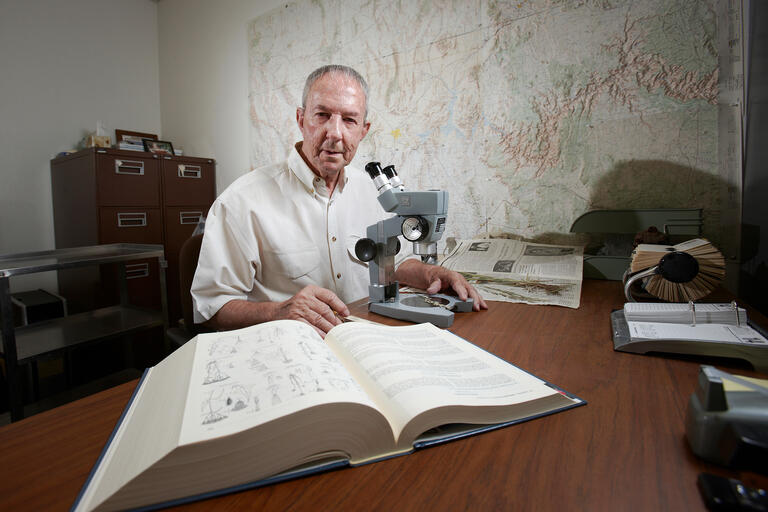
"The prime advocate for that project was Don Baepler, who was, by the way, chancellor of the university system and UNLV"s president at one time. You know he is a bird specialist, an ornithologist" He still has a little office over there where he works on his birds."

Baepler, like McCullough, isn't surprised at Reid"s excellent memory or his regard for old friends at UNLV. "I've always liked Harry. He is a thoroughly delightful person. And he has brought really noteworthy amounts of funding to UNLV and the state. It's quite unusual for a small state like Nevada to have someone in such an important position."

Harter couldn't agree more. "The senator has many longtime friends at UNLV, and he can count me as one of them. But the truth is that he has been an exceptional friend to the entire UNLV community over the years through his support of our programs, research, and overall mission. We are fortunate to have such a wonderful advocate in our corner."

U.S. Sen. Harry Reid


Related Articles: